Piece count is not a difficulty rating. It is a measure of how many evenings you are committing to and how much table you are giving up.
The honest conversion
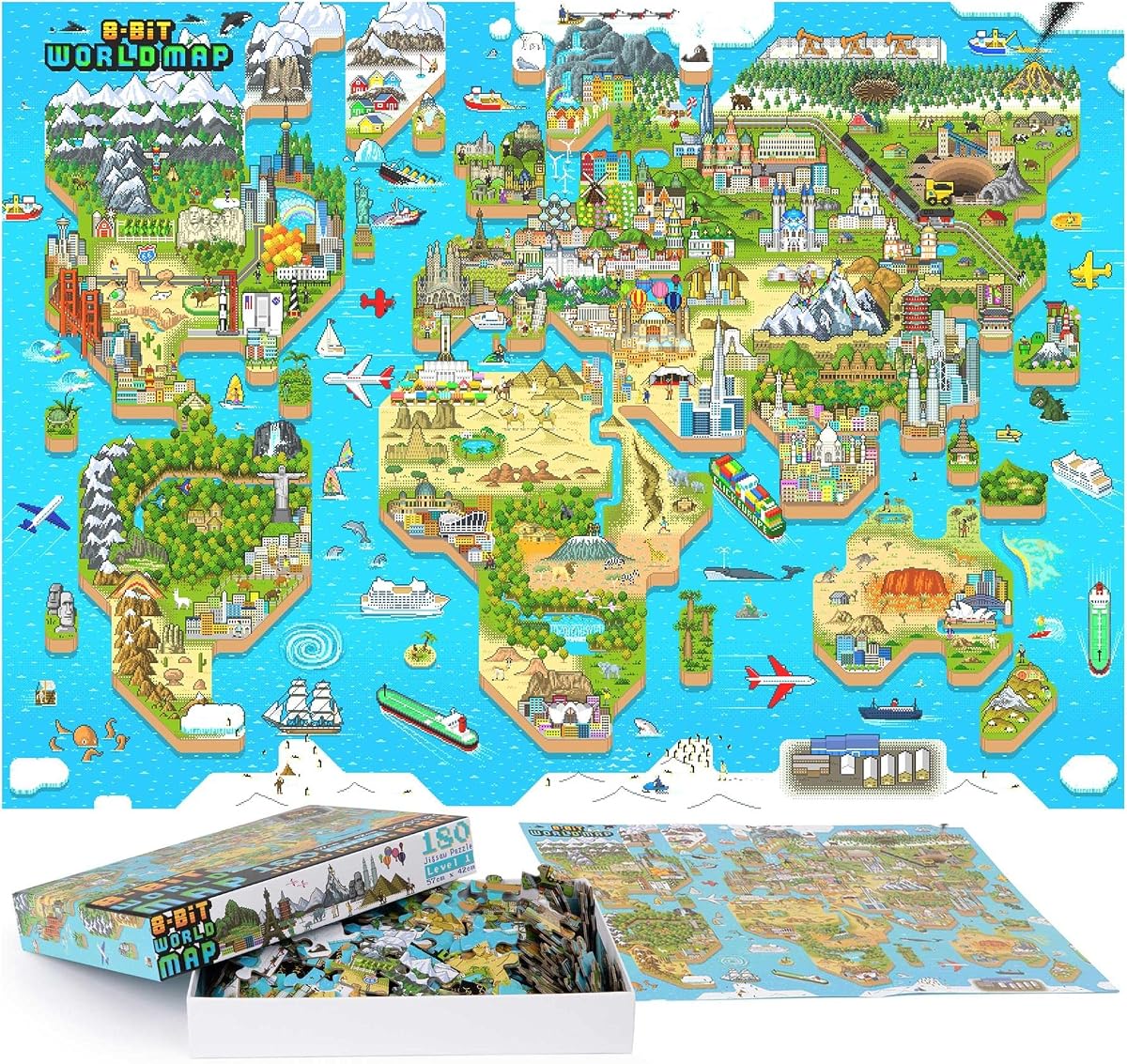
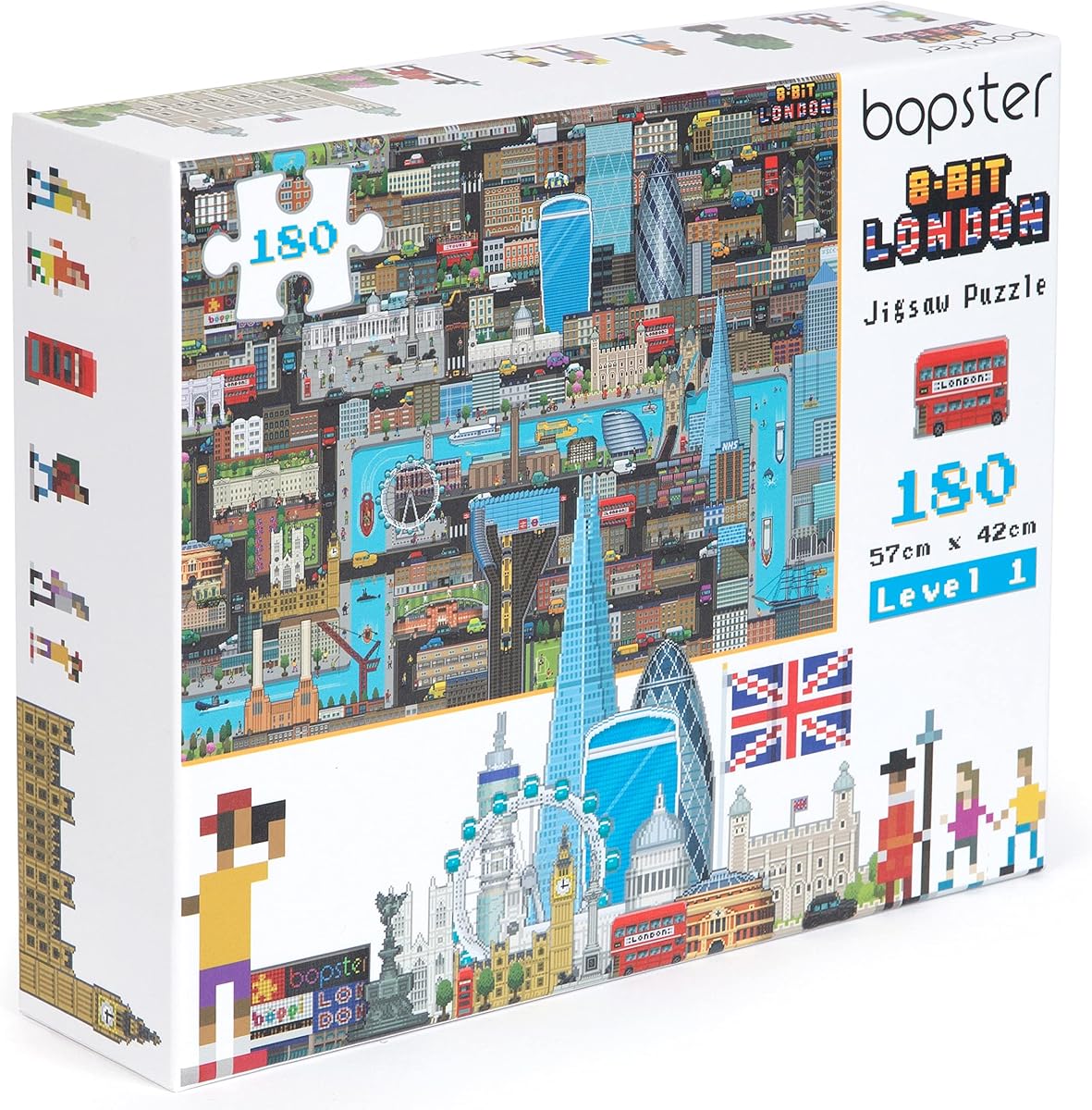
A 180 piece puzzle is roughly one hour for an adult and one afternoon for a child. A 1000 piece puzzle is somewhere between six and fifteen hours depending on the artwork, and almost nobody does that in a single sitting.
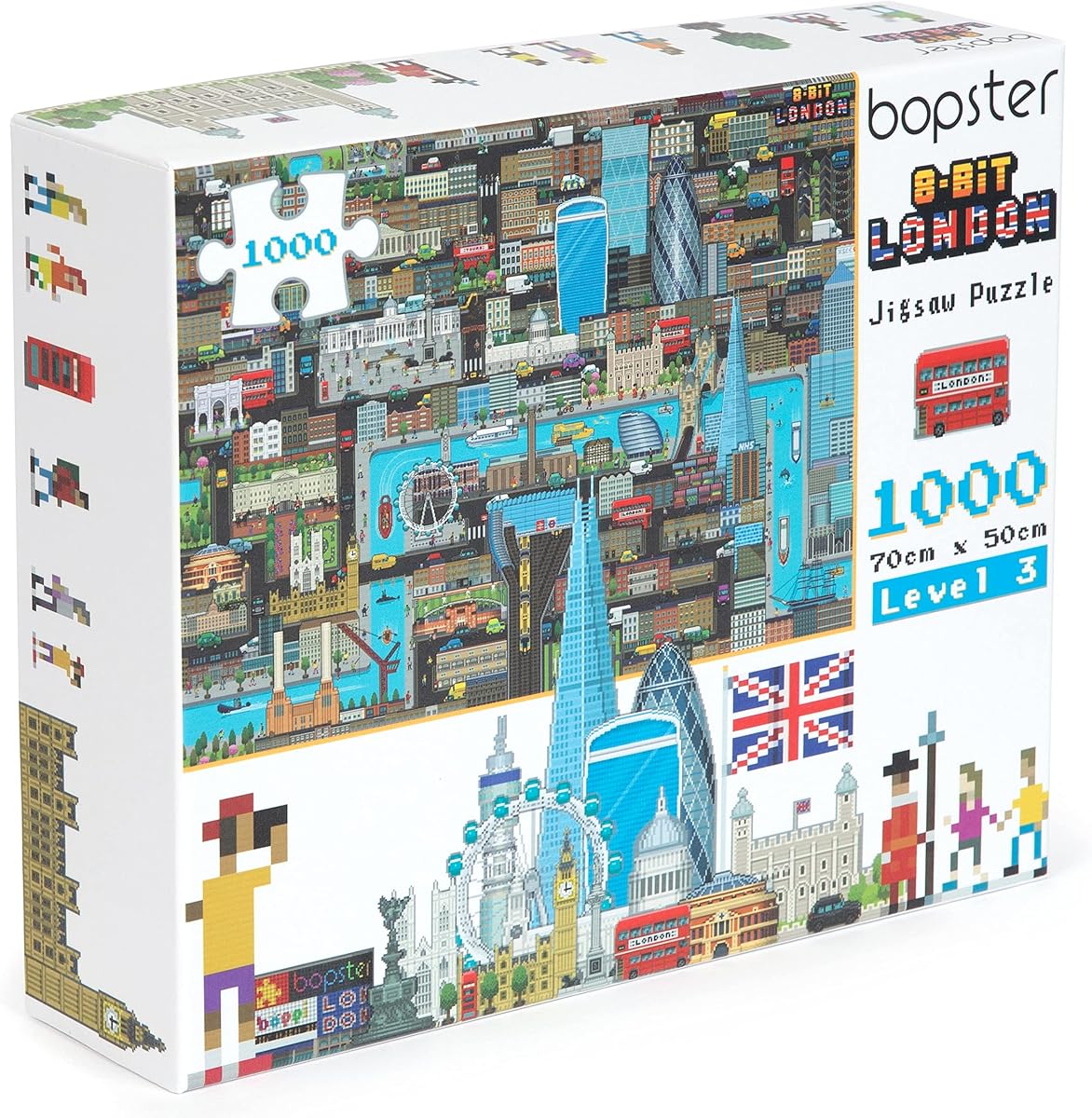
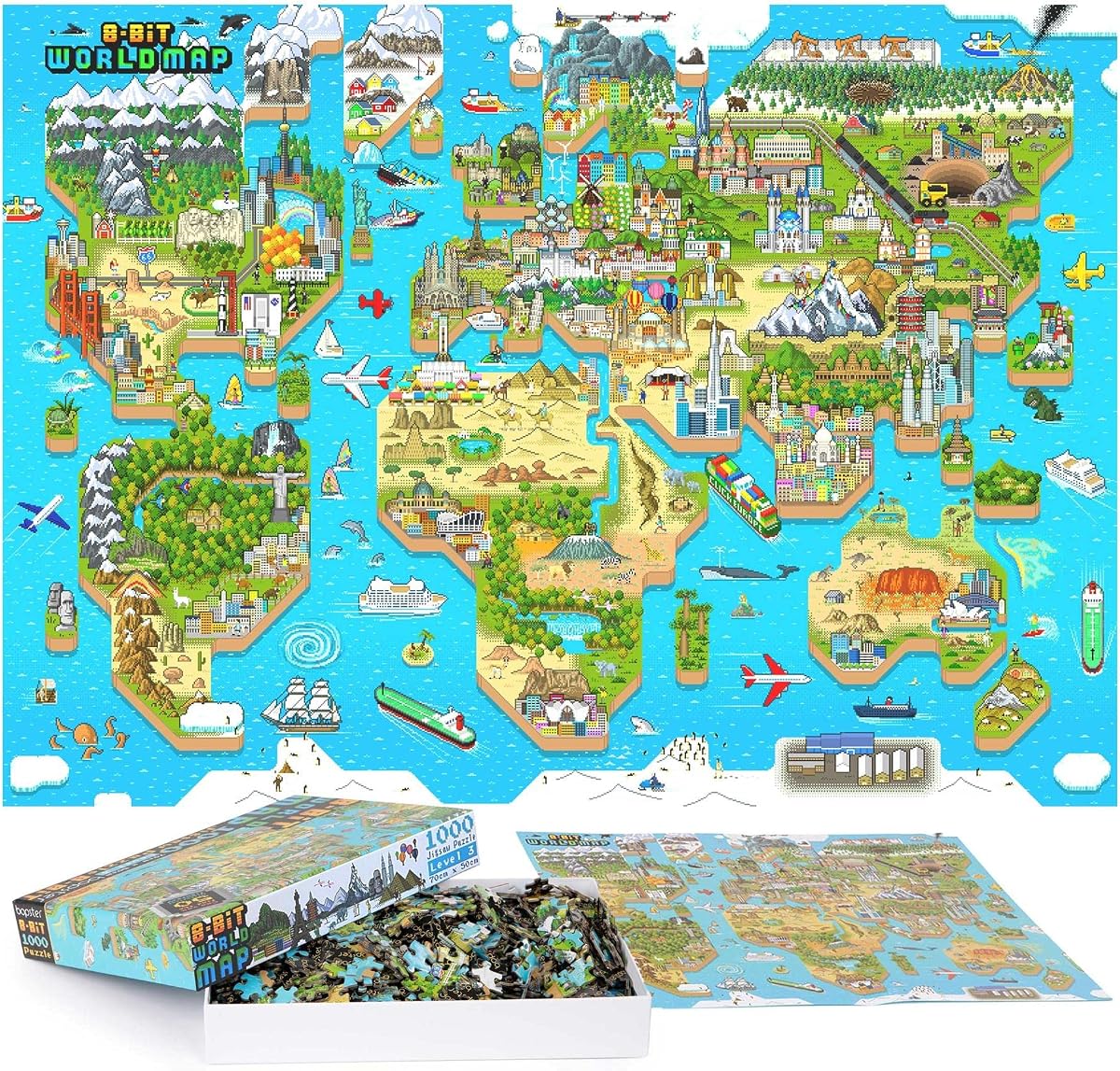
The number that matters more than either is the footprint. Our 1000 piece maps finish at 70 by 50 centimeters, which is most of a dining table once you allow room for sorting trays.
Artwork changes everything
Two puzzles with the same piece count can differ by a factor of three in build time. Flat color is hard. Repeating pattern is hard. A dense illustration with a different drawing every few centimeters is far easier than it looks, because every piece carries an identifiable object.
This is why our pixel maps are rated level 3 and our illustrated maps of the same size feel gentler.
Matching the count to the person
Under six: 180 pieces, large cut, and expect to sort the edge yourself.
Six to ten: 180 to 500 pieces, with the picture mattering more than the number.
Ten and up: 1000 pieces becomes realistic, provided the table can stay occupied for a week.
Adults returning after a long gap: start at 1000 with an illustrated picture, not a photographic one.
When a smaller count is the better buy
Holiday cottages, hospital stays, train journeys and anything where the build has to finish before you leave. A half built 1000 piece puzzle that has to be swept into a box is a genuinely disheartening thing.
Micro puzzles solve this differently — 150 pieces in the footprint of a paperback, which takes an evening and occupies almost no table at all.
Short answers
Is 500 pieces a useful middle ground?
It is, and it is the count we are asked for most often. Several of our pixel maps run as 500 piece editions alongside the 180 and 1000 versions.
Do bigger pieces mean an easier puzzle?
Only for small hands. For an adult, piece size changes comfort rather than difficulty — the artwork sets the difficulty.